Category Archives: Uncategorized

More and Better vs. Better Leads to More

How would you prefer to grow – as a person, as a team, as a business?

As I was working with a client CEO reviewing a recent growth plan and looking towards how we need to adapt it for the new year, the image is what I scribbled down as it popped into my mind. This concept drove the rest of our conversation as we outline that plan for the board.

So allow me to make a case for at least a balance between more and better, and a move towards defining and measuring better before you define and measure more – as a person, for your team, for your business.

(Slight aside – I am a Bears fan and have done my best to not make any reference to Good, Better, Best…)

We – as people, as teams, as businesses – default to More and Better. More friends, more connections, more people on the team or the team doing more, more at the proverbial top of the funnel, more in terms of full pipelines, more in terms of revenue and profit. And then figure out what better is by churning through the more. The process keeps us busy, makes our models and systems smarter, and so on. More certainly produces a whole lot of data.

We – as people, as teams, as businesses – tend to have something inside of us telling us what’s better. Allowing ourselves to be who we are, doing what we are good at, doing what we enjoy, what we love tends to lead to better. However, we tend to put that on the back burner as we look around and think we see so many having so much success with more.

And as we are increasingly tuned in to algorithmic-based success on digital platforms, more and better takes on an ever evolving meaning where more definitely outstrips better. And the definition of better can be lost in the desire to continually ratchet up the more.

But the authenticity of better attracts more. More of better connections with people, more of better connections with your team, more of better connections with those who are most passionate about your business. More of people who understand you better, which means you and they can make better decisions about spending more time and/or money together.

Personally, your better provides the filter for the sorts of people you want to spend your time with, and the sorts of work you want to spend your time on. Within your team, your better provides the filter for who is on your team. Within your business, better provides the filter for who you serve and how you serve them.

In the midst of your annual planning – or your annual resolution setting for that matter, make sure you understand your goals and KPIs for better. You’ll find regardless of how you define more, your better will lead to growth – as a person, as a team, as a business.

Leave a comment

Filed under Uncategorized

Never a Waste of Life

It’s the work. It’s always been the work.

Not the grind. Not the hustle. Not the next buzzword.

Not the work for the work’s sake. Not the work for self-aggrandizement. Not for better titles and bigger teams.

The work needs partners, collaborators, mentors. The work knows “No one has the corner on smarts.”

Not tools, technology, process instead of work. Tools, technology, process to learn, to improve, preferably faster – but always to learn and improve.

Not the work instead of family. The work because of family.

The work is a challenge. The work feeds curiosity. The work needs creativity – and solutions, results.

Not always fun. Not always fulfilling. But I’d like to always be able to say “Maybe a waste of words and time, but never a waste of life.”

(Credit to Roy Spence for the first quote. Credit to Uncle Tupelo for the second quote.)

Leave a comment

Filed under Uncategorized

A Solutions and Synthesis Mindset

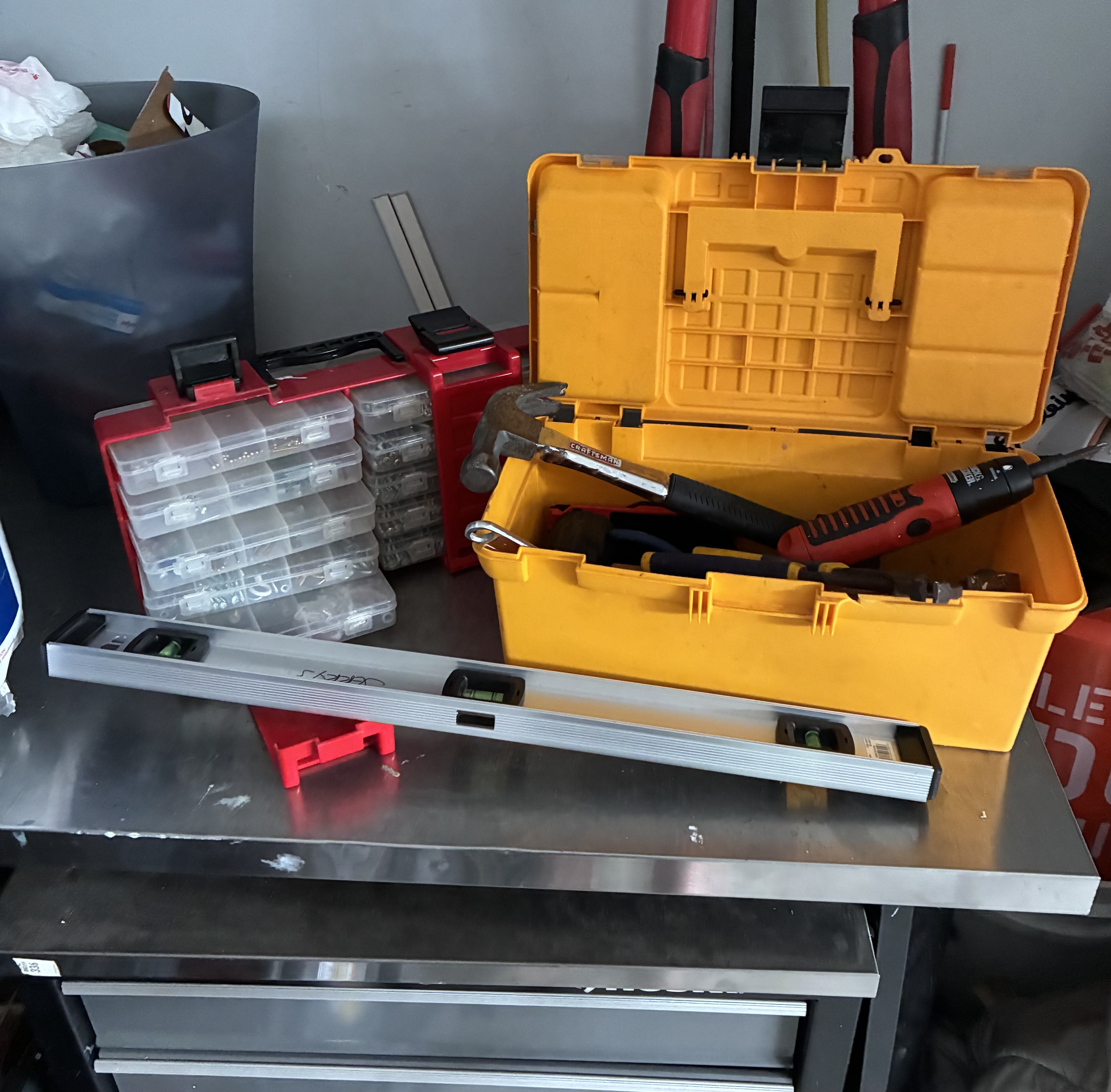
“Don’t go blaming the toolbox. You need the right tool for the job.”
– Bob the Builder

I grew up professionally in advertising agencies. For the first decade of my career, I was working on a wide variety of clients in a wide variety of industries with a wide variety of target audiences using a wide variety of media and technologies to go to market.

I was blessed to build and run a digital media team for most of that first decade. While the focus of the team was digital, we operated using a couple of key ideas.

First, we didn’t have to use any particular vendor, technology, or tool to solve a problem. We led with curiosity and finding the best combination of solutions to solve a problem.

Second, we believed in the adage, “Just because you can, doesn’t mean you should.” Grounded in the first idea, we were continually learning and understanding new vendors, technologies, and tools, how they worked, what they did for us and our clients. But we fought the urge to do something new for the sake of it being new.

We weren’t against “test and learn”, but we also weren’t a team with a mandate to “test and learn”. We had to prove it and invest wisely.

The balance of these two ideas allowed us to stay on the cusp of new solutions while ensuring we had a plan in place for how new solutions would deliver against KPIs – including KPIs tied to the operational efficiency of the team.

Sometimes we were leaders in applying new solutions. Sometimes we were followers. But we ALWAYS were focused on delivering results to drive the business.

And we were ALWAYS continuously learning, optimizing our results, and removing the tools that were not contributing to our KPIs.

This meant we always had a full and refreshed toolbox for solving problems. We understood what each tool did, why it was in the toolbox, and when to use it.

Across the next two decades of my career – which has also included a wide variety of businesses in a wide variety of industries with a wide variety of target audiences using a wide variety of media and technologies to go to market (as well as a pivot into operational leadership) – these two ideas have remained with me.

When determining the best way to synthesize a set of solutions to make an alphabet soup of other solutions integrate to deliver the optimal solution for customers or the optimal operational efficiency of my teams, the ideas that (1) we do not have to use any given vendor, technology, or tool to solve a problem, and (2) “Just because you can, doesn’t mean you should” do and will remain relevant.

Leave a comment

Filed under Uncategorized

Let’s Go!

It’s His plan, not your plan…

This is not a “you got this” or “you should do this” (whatever “this” is), “everything is broken and there’s nothing you can do about it”, or “you’re expendable in the future” type of post.

This is a “there are a whole lot of things in this world you can’t control, but you’ll never get to where you’re going unless YOU take the steps to get where you’re wanting to go” post.

And for the Christians out there, this is a “It’s His plan, not your plan, but you gotta put the work in” kind of post.

I am, by nature and by trade, a strategist, a planner. Someone who observes and researches markets to identify and take advantage of opportunities. And then does it, measures it, and continually improves how it’s done.

I am not, by nature or by trade, a person who frets over things I cannot control that are occurring in markets and chooses to complain or chooses to not seek to find options or opportunities to improve.

Let’s find where the opportunities exist now and where they will exist next. And then go see what we can do to take advantage of them, learn from what we do, and keep improving as we go.

Let’s take the steps to be successful in the current state and even take steps to make our side of the market (whatever the market, whichever side you may be on) work with efficacy for all vs. lamenting about all that’s wrong, blaming the other side of the market, or playing the game the same way as the competition – even if it seems the competition is “winning” right now.

More than likely, each of us are going to be on the other side of the market (whatever the market, whichever side that may be) at some point in time. So let’s do our part now to make it work better.

There is only one way forward – forward. Create a plan that allows you to look at the market, whatever the market may be, whatever role you play in the market, as a strategist and a planner, find where the opportunities exist for you, and go get it.

Let’s go!

Leave a comment

Filed under Uncategorized

Do or Do Not. There is No Try.

The next thing is perpetual. There’s really no point in getting worked up and worried about the next thing.

There’s no point in getting sucked into the hype and cottage industries that are built around the next thing.

The best thing to do is just that – do. The other option – do not – makes no sense.

Why do nothing when we have free access to everything we need to do something?

I’m not talking about how you can build a six figure income in a half hour on AI.

But what I am talking about is learning how and why to use the many free AI tools that are at your disposal.

Learn a few of them yourself, figure out which provide you the most benefit in your day to day and in your job, and be open to new iterations.

You don’t need a special program or training for this. And if you do, find a free one. There are many.

The next thing is perpetual. There’s really no point in getting worked up and worried about the next thing.

Do or do not. There is no try.

Leave a comment

Filed under Uncategorized

Seeking to Understand: Current State of the Job Market and Systems

From The Flaming Lips, Yoshimi Battles the Pink Robots

I’m in the midst of looking for a new job. I’ve not posted here for a few weeks as I’ve been spending time doing just that, getting acclimated to how the process works, how the tools are built, who the players are.

This is not meant as criticism. Just observation from more than a couple years of experience as a leader of people , builder of teams, and hiring manager, as well as more than a couple years of experience within digital products, digital media, segmentation, and targeting of messages along a decision path.

Observation and seeking to understand the market. I fear in my role as hiring manager I did not do enough diligence to understand the market and systems at play. And now in my role as job seeker I’m seeking to stay positive, have some empathy, but position myself optimally.

My hypotheses are:

  • There is an over-reliance by recruiters and hiring managers on systems (ATS) that are being used too stringently and are in the midst of evolution.
  • AI in the hands of job seekers is allowing the gaming of ATS leading to what appears to be an over-abundance of qualified candidates for any given role.
  • As with any market and system, there needs to be humans setting the strategy, staying engaged, and making the key decisions.

I send this along to you, dear reader, as I’m curious to get your thoughts…

FROM THE LEADER’S PERSPECTIVE
The most popular business books on leadership and the most popular business leaders on LinkedIn will, rightly, extol the virtues of the uniqueness of the people on their teams. The coming together of these people such that the whole is greater than the sum of the parts. Many have stories where they gave someone a chance who seemed to not match a particular mold, and that person flourished. I’ve had this happen more than once in my career.

Granting macro-trends affecting the labor market from tariffs to under employment to AI and so on, it seems to be an employer’s market right now. Every market operates in cycles, so this, too, will pass.

Regardless, I have seen a decent number of open roles that interest me and to which I’ve applied. As I cannot control the macro-trends, I’m staying focused on what I have the best chance to control.

THE DANCE: JOB SEEKERS/AI/ATS/RECRUITERS/HIRING MANAGERS
What I’ve seen thus far and am having confirmed through many conversations with those in my network who are both hiring managers and job seekers:

  • ATS, by and large, are looking for exact keyword matches. This is the primary cut when it comes to making a decision on who is interviewed.
  • AI is making the customization of resumes and cover letters to the exact keyword match relatively easy and efficient.
  • However, the AI tools tend to awkwardly place the keywords into resumes and cover letters. Or they will place them there even if the candidate doesn’t have the requisite experience the keywords reference to provide a closer match to the job description since that is the goal.
  • So without some editing, the resume and cover letters could pass the ATS, but may lack in terms of human readability – and truthfulness.
  • As more people realize how simple it is to use AI tools to align their content with keywords in job descriptions, one has to assume there is an ever increasing number of candidates for roles who look good.
  • ATS are most certainly being improved with AI which will alter this process and cause some more bumps in the road as AI reads AI to determine if the human is worthy of the role.

The recruiter would seem to now have a large number of candidates that appear to be good matches for the role. The question then becomes what is the next set of criteria to prioritize the candidates?

Here is the point where the job seeker loses visibility. As a hiring manager, I understand what I would do to address this, but I’m viewing this as a job seeker right now.

NETWORKING AND ATS
It has been granted over and over again that the best way to find your next opportunity is by networking. My personal experience would say by and large this is true.

What I’ve seen and heard related to this is, even if you have a personal connection related to a role you’re interested in, the process will still have to flow through the ATS, then the recruiter, then the hiring manager – even if the person in your network had reached out to the hiring manager about you.

There is a good chance the benefit of the personal connection will not be seen at the hiring manager – unless the hiring manager is willing to step out of the normal process.

WHAT DO YOU THINK? WHAT DO YOU KNOW?
As I said, there is no judgement in what I’ve written so far. I’m wanting to understand the market better for two reasons.

Most immediately, I’m a Job Seeker who wants to find my next job as efficiently and effectively as possible.

But at some point in the future, I will be a Hiring Manager. I will want to ensure I am able to find the best people for my team. And I will want to do it with respect for who they are first, as well as with efficiency and effectiveness.

So I ask you – what are you seeing? What do you think? In whatever role you play in this market.

Leave a comment

Filed under Uncategorized

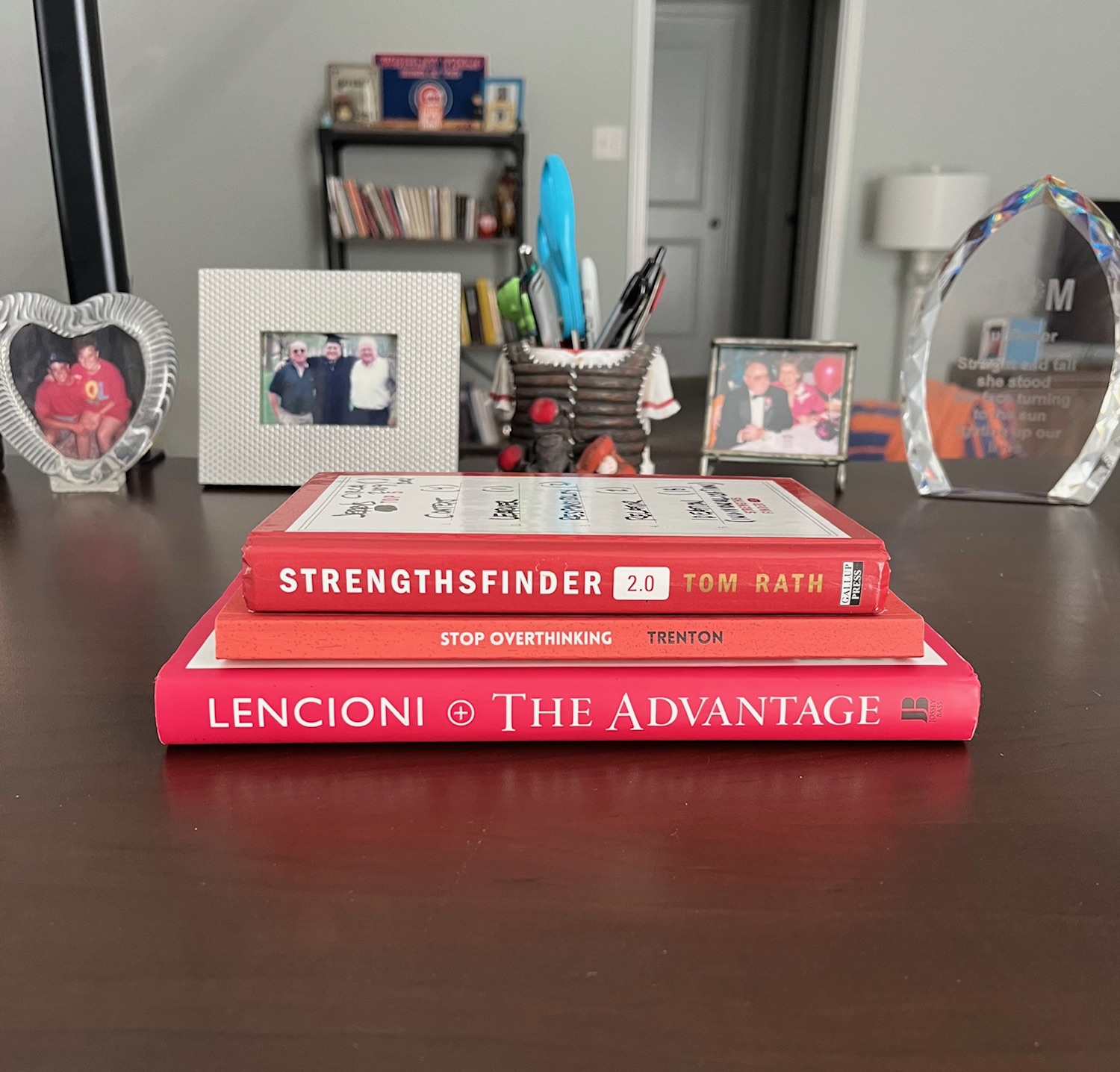
The 3 Books on My Desk Right Now

Every so often, I look at the stack of books on my desk that I’m frequently thumbing through and start to wonder how they’re all connected. They tend to be a snapshot of what I’m working through, thinking about, and seeking to improve, but subject matter can often seem disparate. Right now, these three are being referenced quite a bit.

STRENGTHSFINDER 2.0 – TOM RATH
This one has a perpetual spot either on my desk or somewhere within arms reach.

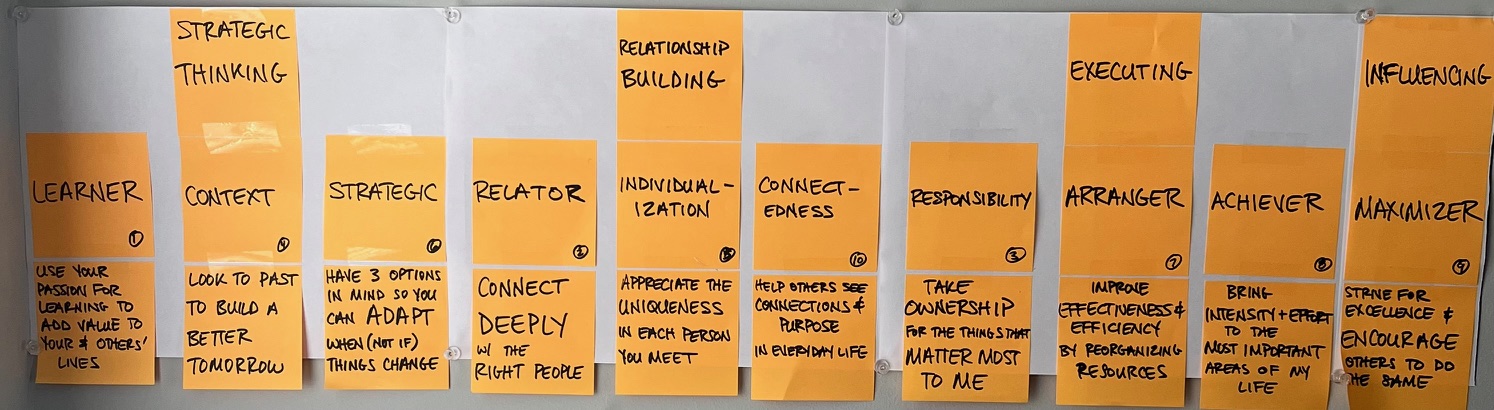
Whether you’re leading a team or contributing as part of one, knowing and applying your strengths is a competitive advantage. Moving from “fixing” weaknesses to amplifying strengths is a powerful mindset shift. I use my top 10 strengths as the foundation of my personal brand and positioning. And as you see below, I have them prominently featured on the wall just to the left of my monitor so they’re never far from my line of sight.

THE ADVANTAGE – PATRICK LENCIONI
I’ve used the approach and methods in this book on companies I’ve worked at and brands I’ve worked on – and I recently applied part of it to my personal brand as well.

The methods in this book for building cohesive leaderships team, creating clarity, over-communicating clarity, and reinforcing clarity are valuable internally to any organization. But what I’ve found is that clarity created internally translates very well to how a company goes to market. It’s not a marketing book, but if you’re looking for ways to uncover who you are as a company or a brand, it’s a valuable resource.

For my personal brand, I focused on the section of the book around creating clarity. The process forced me to think deeply about my purpose, my core values, and what I do professionally. The outcome and insight I have from StrengthsFinder was incredibly useful for this process.

STOP OVERTHINKING – NICK TRENTON
Overthinking is perhaps the bane of most folks who are or consider themselves “planners” by nature.

For me, it can be a side effect of my various strengths – two of which are Learner and Strategic. I’m not an analysis paralysis type of person, don’t have a Sherlock Holmes “Mind Palace” thing, but I love to learn and I love to consider alternatives.

The techniques in this book to declutter and focus the mind are incredibly helpful for those of us who tend to have a hard time finding the off switch. The most important reminder for me personally is that clarity comes from action. Get some things going, see how they work, then use that insight and information to continue making more informed decisions.

Always interesting how each book I may be referencing tends to appear to be unrelated to the others, yet taken as a whole, each plays a part in driving cohesive thinking…

Leave a comment

Filed under Uncategorized

From “Have you?” to “How would you?”

If you are asked, “Have you done this before?”, and the short answer is, “No”, always follow through with an answer as if you were asked, “Can you do this?” or “How would you do this?”. And/Or give an example of how you were tasked with something you’d never done before, and how you went about figuring it out.

And if you ever ask someone, “Have you done this before?” as a means to winnow down a consideration set of people for a task or a role or whatever, strongly consider following up with, “OK. Give me an example of an instance where you were tasked with something you’d never done before and you had to figure it out. What did you do?”

How to do something can be taught. Whether it’s using a tool, a technology, an interface, rules specific to a business or industry, and so on.

Curiosity, problem solving, and resilience are traits that are typically inherent and not easily taught. Find those and build around them.

Leave a comment

Filed under Uncategorized

AI, The No Click Future, and What We’ve Seen Before

Came across THIS BRIEF from Bain – co-authored by an awesome former colleague of mine, Megan McCurry – touting the AI-driven future of search as “zero click”. I believe this came up in a marketing newsletter of some sort two days ago, but it was published in February.

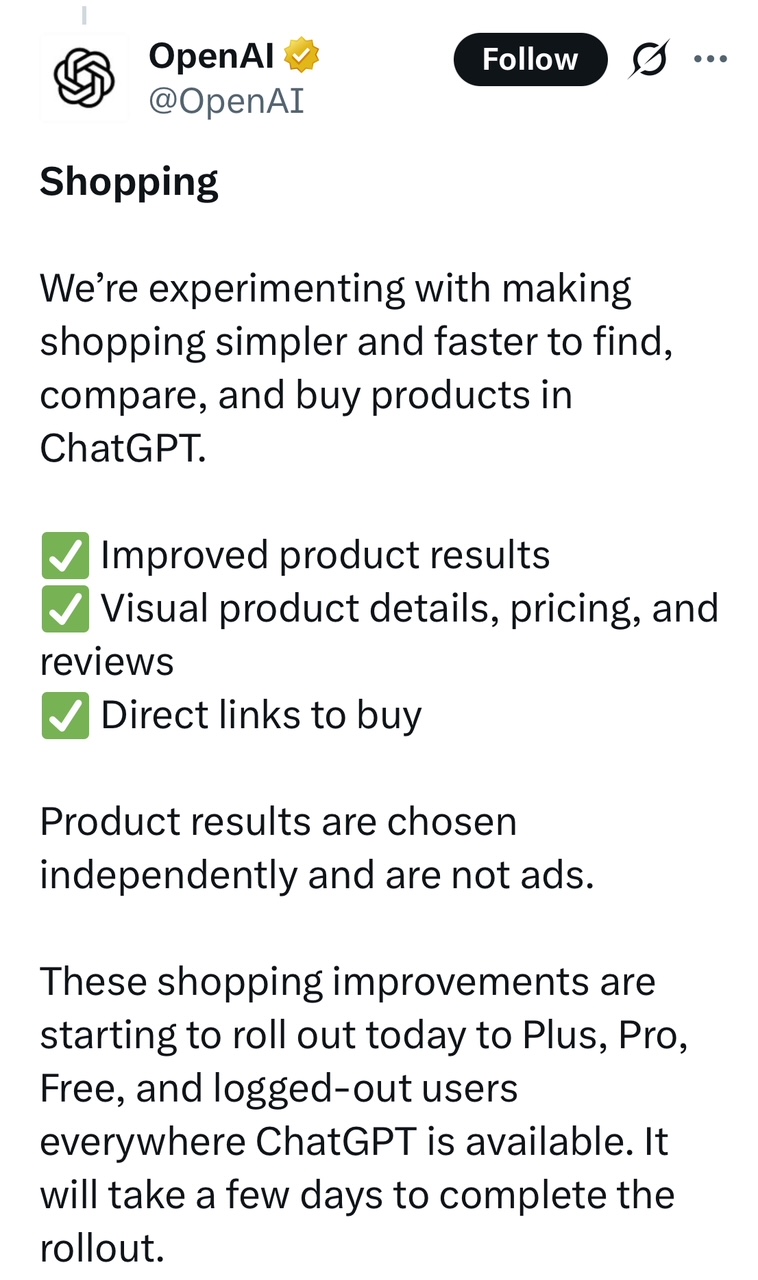
Yesterday, in a separate newsletter focused on AI, a link to the following post on X from OpenAI was published:

ZOOM IN: THREE PRACTICAL INSIGHTS
First, AI interfaces are built to provide results to queries that do not require a click or tap for the user to find what they need. Potentially some more engagement in the form of follow up queries, but it’s not a matter of type/enter/point/click. This is a very important insight in terms of how one creates and measures the effectiveness of content, especially for those who tie a lot of weight to last click attribution.

Second, that said, it’s looking like AI results will have some level of a click or a tap that will occur that will lead to a potential purchase. So while content strategy certainly needs to evolve, the zero-click future may be a bit further off than it appeared just a couple of short months ago.

Third, it seems pretty obvious where “direct links to buy” will take the AI business model, even if they say they are “not ads” – yet. I’m going to be lazy here and not look it up, but Google’s purpose or vision or insert word(s) here for the most important thing they ever wanted to do or be was to make all information available to everybody everywhere all the time – or something like that. They built one heck of an ad model from that high-fallutin’ purpose.

ZOOM OUT: WE’VE SEEN THIS BEFORE – AND WE’LL SEE MORE OF IT FASTER
In my days running a digital media team on the agency side, I’d written an article that made the point that history has shown in short order after a medium or media vehicle is created monetization via advertising and/or sponsorship of some sort tends to follow. Or it’s quite possible a medium or media vehicle was created solely to be monetized (See THIS LINK with the search “why were soap operas created” for a classic example of a media vehicle created solely for advertising/sponsorship monetization purposes – oh, and it’s a zero click search BTW. See LTK if you’d like a more modern take on a media vehicle – or platform – created solely for advertising/sponsorship monetization).

Pretty sure in that article I wrote I alluded to Moses breaking the stone tablets of the Ten Commandments after bringing them down from the mountain because he got ticked off when a PE investor approached him about sponsorship opportunities either on the tablet itself or creating a case to display the tablets that could support a larger number of sponsors. Of course, a portion of the proceeds would be set aside to aid in building the temple once they arrived in the Promised Land.

There are three main things I’d like to point out here.

First, regardless of original intent, the large majority of media, media vehicles, platforms, and so on that people use to do something or spend significant time with looking at, listening to, or manipulating in some way will be monetized or supported with advertising or sponsorship in some way.

Second, get used to change, but don’t get sucked into whatever “it” is right now being the “it” that ends all other “its”. I’m a skeptic of Kuzweil’s Law of Accelerating Returns. I’m not going to moralize at this time on whether the pace at which we may or may not be moving towards general artificial intelligence is good or bad. I’m only saying keep your head about you and realize whatever is going on right now has happened before and will happen again.

Third, don’t just think tactically about new evolutions in media. That can be easy to do. There’s always a desire to jump on the newest thing – or there’s the desire to avoid the newest thing.

Regardless, media/platform/technology usage is customer behavior. It’s telling you something about how people are getting things done or entertaining themselves. How can you use these evolutions to serve their needs with your products and services better?

And related to that, how can new media/platforms/technologies be used by YOU to do your work better/faster? What needs to happen to integrate into your existing tech/martech stack so you and your team can take advantage?

Leave a comment

Filed under Uncategorized

My Favorite Compilation Albums: Greatest Hits

Thinking about this exercise took me to vivid places in my memories between roughly 1979 and 1997. Yes, these are the musings of a mid-to-late Gen X’er.

The “Compilation” album is fertile territory for a writer who enjoys music of many kinds. I’m seeing a few pieces along this vein coming.

This exercise, and any that follow related to music, books, movies, etc, is one of personal favorites. Not “the greatest” or “the best”. There was not an intensive list making process followed by creation of analytical tools to rank, followed by a final use of whiteboards and/or sticky notes to order and reorder things qualitatively to truly get things where they should be. The Good Lord knows I had to fight that urge because I would enjoy the process.

No, I didn’t go there. I believe there are parts of life that are best left outside of a data-driven approach to define what is “good”. I think art is meant to, loosely quoting Emerson, belong to the eyes that see it, the ears that hear it, the memories or feelings provoked by it.

My Favorite: Tom Petty & the Heartbreakers Greatest Hits (1993 release)

This CD was, I think, in the last cache of ones I got from Columbia House. Which means I also had Steve Miller Band’s Greatest Hits, (at least the first one), Eagles Greatest Hits (at least the first one), and Jimmy Buffett Songs You Know by Heart.

Again, the musings of a mid-to-late Gen X’er who grew up in a small, Midwestern town on rock/classic rock radio of the late 70s-early 90s when what streamed to you in terms of music were post cards from mail order music services.

Reflecting on this one, Tom Petty the lyricist is like Ernest Hemingway. Nothing is wasted. No more is said than what is needed. No need for over wrought adornment. You know what he means. Like you’re sitting across a table from him, having a conversation. It’s not like he sees into your soul. It’s more like he hears you out, nods his head, and provides a better, crystal clear articulation of what you meant.

The revelation was just how good this band was. “Tight” is the best way to describe it. Hooks, melodies, layers. Yet they seemed like they could be the best garage band of all time.

Yes, I realize there were a few songs from Full Moon Fever, Tom Petty technically “solo”, but the backing band for that album was mostly The Heartbreakers. I’d rather not quibble over that.

Leave a comment

Filed under Uncategorized