
Came across THIS BRIEF from Bain – co-authored by an awesome former colleague of mine, Megan McCurry – touting the AI-driven future of search as “zero click”. I believe this came up in a marketing newsletter of some sort two days ago, but it was published in February.
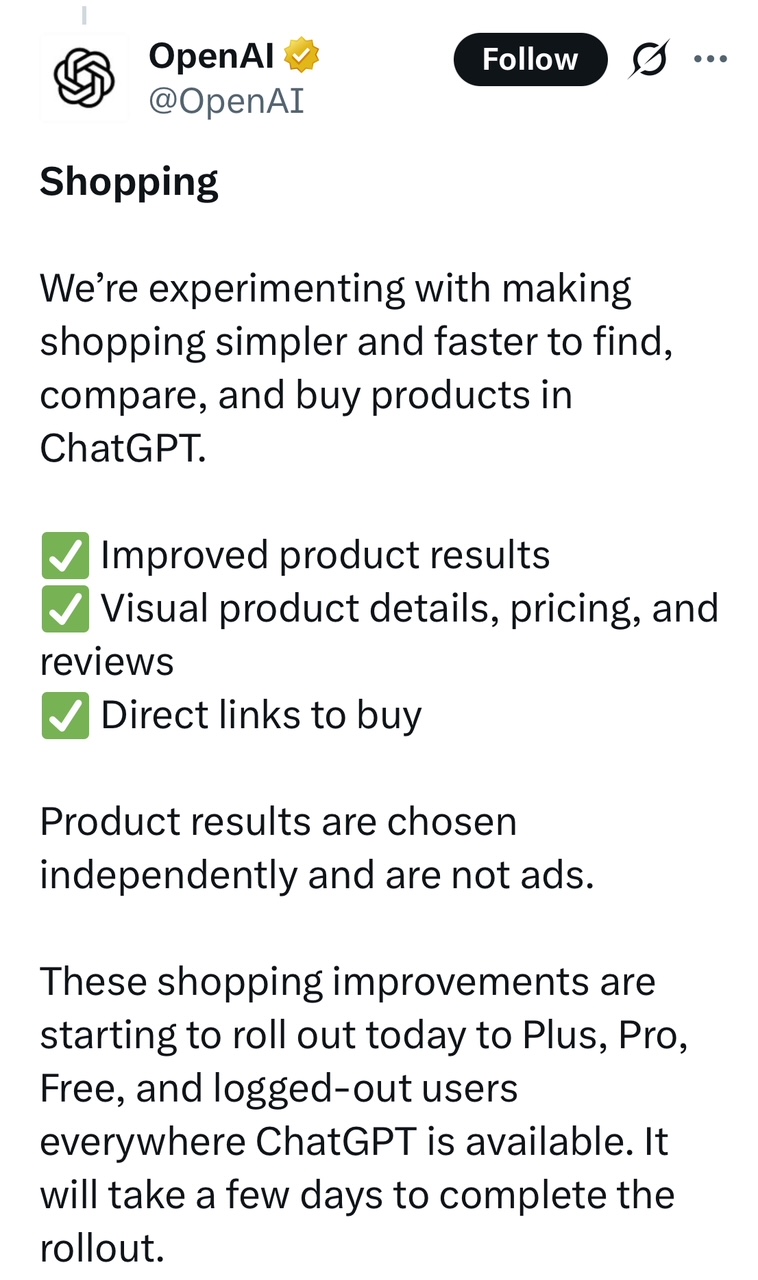
Yesterday, in a separate newsletter focused on AI, a link to the following post on X from OpenAI was published:
ZOOM IN: THREE PRACTICAL INSIGHTS
First, AI interfaces are built to provide results to queries that do not require a click or tap for the user to find what they need. Potentially some more engagement in the form of follow up queries, but it’s not a matter of type/enter/point/click. This is a very important insight in terms of how one creates and measures the effectiveness of content, especially for those who tie a lot of weight to last click attribution.
Second, that said, it’s looking like AI results will have some level of a click or a tap that will occur that will lead to a potential purchase. So while content strategy certainly needs to evolve, the zero-click future may be a bit further off than it appeared just a couple of short months ago.
Third, it seems pretty obvious where “direct links to buy” will take the AI business model, even if they say they are “not ads” – yet. I’m going to be lazy here and not look it up, but Google’s purpose or vision or insert word(s) here for the most important thing they ever wanted to do or be was to make all information available to everybody everywhere all the time – or something like that. They built one heck of an ad model from that high-fallutin’ purpose.
ZOOM OUT: WE’VE SEEN THIS BEFORE – AND WE’LL SEE MORE OF IT FASTER
In my days running a digital media team on the agency side, I’d written an article that made the point that history has shown in short order after a medium or media vehicle is created monetization via advertising and/or sponsorship of some sort tends to follow. Or it’s quite possible a medium or media vehicle was created solely to be monetized (See THIS LINK with the search “why were soap operas created” for a classic example of a media vehicle created solely for advertising/sponsorship monetization purposes – oh, and it’s a zero click search BTW. See LTK if you’d like a more modern take on a media vehicle – or platform – created solely for advertising/sponsorship monetization).
Pretty sure in that article I wrote I alluded to Moses breaking the stone tablets of the Ten Commandments after bringing them down from the mountain because he got ticked off when a PE investor approached him about sponsorship opportunities either on the tablet itself or creating a case to display the tablets that could support a larger number of sponsors. Of course, a portion of the proceeds would be set aside to aid in building the temple once they arrived in the Promised Land.
There are three main things I’d like to point out here.
First, regardless of original intent, the large majority of media, media vehicles, platforms, and so on that people use to do something or spend significant time with looking at, listening to, or manipulating in some way will be monetized or supported with advertising or sponsorship in some way.
Second, get used to change, but don’t get sucked into whatever “it” is right now being the “it” that ends all other “its”. I’m a skeptic of Kuzweil’s Law of Accelerating Returns. I’m not going to moralize at this time on whether the pace at which we may or may not be moving towards general artificial intelligence is good or bad. I’m only saying keep your head about you and realize whatever is going on right now has happened before and will happen again.
Third, don’t just think tactically about new evolutions in media. That can be easy to do. There’s always a desire to jump on the newest thing – or there’s the desire to avoid the newest thing.
Regardless, media/platform/technology usage is customer behavior. It’s telling you something about how people are getting things done or entertaining themselves. How can you use these evolutions to serve their needs with your products and services better?
And related to that, how can new media/platforms/technologies be used by YOU to do your work better/faster? What needs to happen to integrate into your existing tech/martech stack so you and your team can take advantage?
 Jerry Courtney’s Sandbox