
Tag Archives: ai

A Solutions and Synthesis Mindset

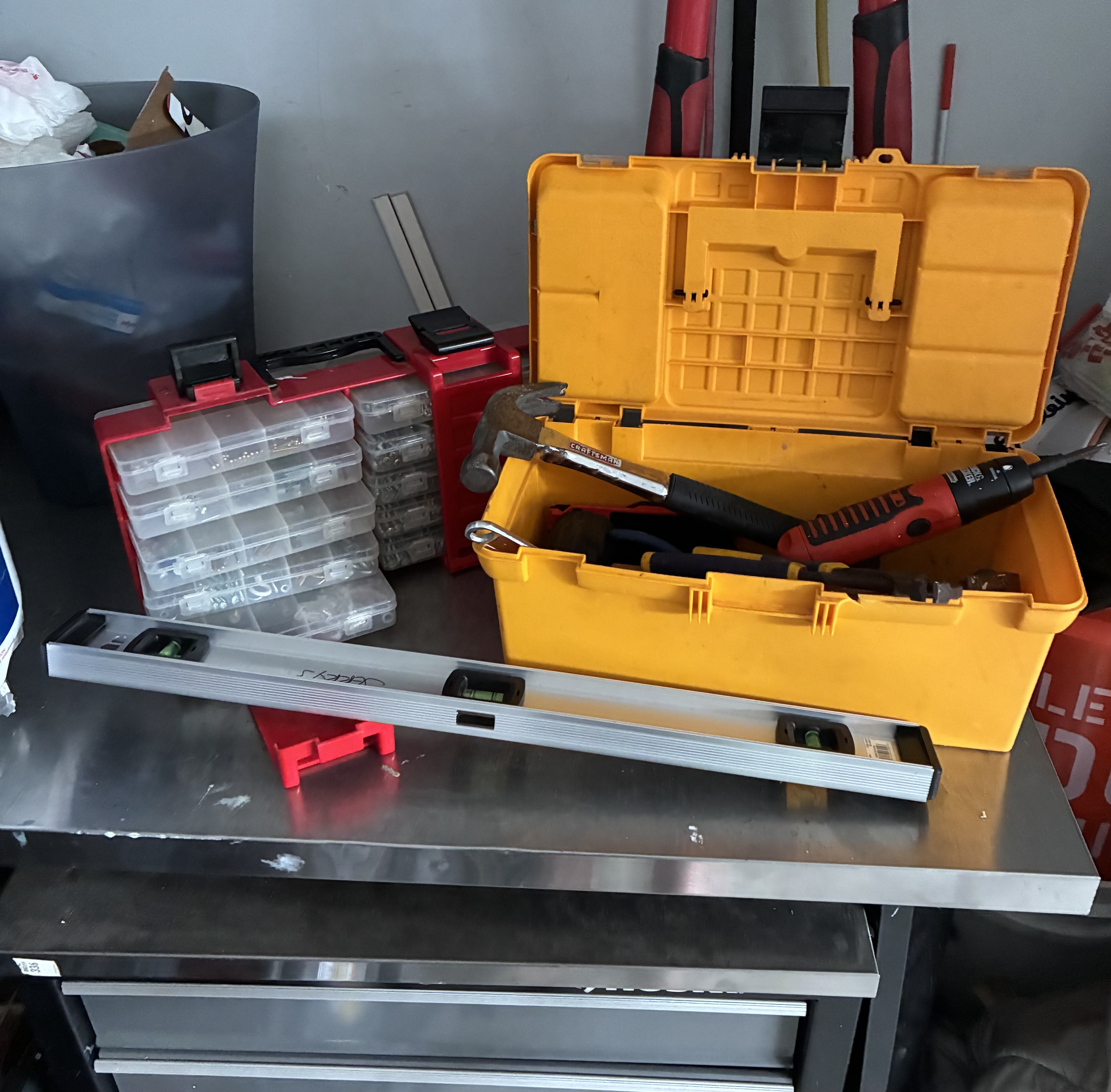
“Don’t go blaming the toolbox. You need the right tool for the job.”
– Bob the Builder

I grew up professionally in advertising agencies. For the first decade of my career, I was working on a wide variety of clients in a wide variety of industries with a wide variety of target audiences using a wide variety of media and technologies to go to market.

I was blessed to build and run a digital media team for most of that first decade. While the focus of the team was digital, we operated using a couple of key ideas.

First, we didn’t have to use any particular vendor, technology, or tool to solve a problem. We led with curiosity and finding the best combination of solutions to solve a problem.

Second, we believed in the adage, “Just because you can, doesn’t mean you should.” Grounded in the first idea, we were continually learning and understanding new vendors, technologies, and tools, how they worked, what they did for us and our clients. But we fought the urge to do something new for the sake of it being new.

We weren’t against “test and learn”, but we also weren’t a team with a mandate to “test and learn”. We had to prove it and invest wisely.

The balance of these two ideas allowed us to stay on the cusp of new solutions while ensuring we had a plan in place for how new solutions would deliver against KPIs – including KPIs tied to the operational efficiency of the team.

Sometimes we were leaders in applying new solutions. Sometimes we were followers. But we ALWAYS were focused on delivering results to drive the business.

And we were ALWAYS continuously learning, optimizing our results, and removing the tools that were not contributing to our KPIs.

This meant we always had a full and refreshed toolbox for solving problems. We understood what each tool did, why it was in the toolbox, and when to use it.

Across the next two decades of my career – which has also included a wide variety of businesses in a wide variety of industries with a wide variety of target audiences using a wide variety of media and technologies to go to market (as well as a pivot into operational leadership) – these two ideas have remained with me.

When determining the best way to synthesize a set of solutions to make an alphabet soup of other solutions integrate to deliver the optimal solution for customers or the optimal operational efficiency of my teams, the ideas that (1) we do not have to use any given vendor, technology, or tool to solve a problem, and (2) “Just because you can, doesn’t mean you should” do and will remain relevant.

Leave a comment

Filed under Uncategorized

Seeking to Understand: Current State of the Job Market and Systems

From The Flaming Lips, Yoshimi Battles the Pink Robots

I’m in the midst of looking for a new job. I’ve not posted here for a few weeks as I’ve been spending time doing just that, getting acclimated to how the process works, how the tools are built, who the players are.

This is not meant as criticism. Just observation from more than a couple years of experience as a leader of people , builder of teams, and hiring manager, as well as more than a couple years of experience within digital products, digital media, segmentation, and targeting of messages along a decision path.

Observation and seeking to understand the market. I fear in my role as hiring manager I did not do enough diligence to understand the market and systems at play. And now in my role as job seeker I’m seeking to stay positive, have some empathy, but position myself optimally.

My hypotheses are:

  • There is an over-reliance by recruiters and hiring managers on systems (ATS) that are being used too stringently and are in the midst of evolution.
  • AI in the hands of job seekers is allowing the gaming of ATS leading to what appears to be an over-abundance of qualified candidates for any given role.
  • As with any market and system, there needs to be humans setting the strategy, staying engaged, and making the key decisions.

I send this along to you, dear reader, as I’m curious to get your thoughts…

FROM THE LEADER’S PERSPECTIVE
The most popular business books on leadership and the most popular business leaders on LinkedIn will, rightly, extol the virtues of the uniqueness of the people on their teams. The coming together of these people such that the whole is greater than the sum of the parts. Many have stories where they gave someone a chance who seemed to not match a particular mold, and that person flourished. I’ve had this happen more than once in my career.

Granting macro-trends affecting the labor market from tariffs to under employment to AI and so on, it seems to be an employer’s market right now. Every market operates in cycles, so this, too, will pass.

Regardless, I have seen a decent number of open roles that interest me and to which I’ve applied. As I cannot control the macro-trends, I’m staying focused on what I have the best chance to control.

THE DANCE: JOB SEEKERS/AI/ATS/RECRUITERS/HIRING MANAGERS
What I’ve seen thus far and am having confirmed through many conversations with those in my network who are both hiring managers and job seekers:

  • ATS, by and large, are looking for exact keyword matches. This is the primary cut when it comes to making a decision on who is interviewed.
  • AI is making the customization of resumes and cover letters to the exact keyword match relatively easy and efficient.
  • However, the AI tools tend to awkwardly place the keywords into resumes and cover letters. Or they will place them there even if the candidate doesn’t have the requisite experience the keywords reference to provide a closer match to the job description since that is the goal.
  • So without some editing, the resume and cover letters could pass the ATS, but may lack in terms of human readability – and truthfulness.
  • As more people realize how simple it is to use AI tools to align their content with keywords in job descriptions, one has to assume there is an ever increasing number of candidates for roles who look good.
  • ATS are most certainly being improved with AI which will alter this process and cause some more bumps in the road as AI reads AI to determine if the human is worthy of the role.

The recruiter would seem to now have a large number of candidates that appear to be good matches for the role. The question then becomes what is the next set of criteria to prioritize the candidates?

Here is the point where the job seeker loses visibility. As a hiring manager, I understand what I would do to address this, but I’m viewing this as a job seeker right now.

NETWORKING AND ATS
It has been granted over and over again that the best way to find your next opportunity is by networking. My personal experience would say by and large this is true.

What I’ve seen and heard related to this is, even if you have a personal connection related to a role you’re interested in, the process will still have to flow through the ATS, then the recruiter, then the hiring manager – even if the person in your network had reached out to the hiring manager about you.

There is a good chance the benefit of the personal connection will not be seen at the hiring manager – unless the hiring manager is willing to step out of the normal process.

WHAT DO YOU THINK? WHAT DO YOU KNOW?
As I said, there is no judgement in what I’ve written so far. I’m wanting to understand the market better for two reasons.

Most immediately, I’m a Job Seeker who wants to find my next job as efficiently and effectively as possible.

But at some point in the future, I will be a Hiring Manager. I will want to ensure I am able to find the best people for my team. And I will want to do it with respect for who they are first, as well as with efficiency and effectiveness.

So I ask you – what are you seeing? What do you think? In whatever role you play in this market.

Leave a comment

Filed under Uncategorized

Extensions of Man – from Written Language to AI

The following is not meant as criticism. It’s simply observation. And the continued curiosity I have as a communications and marketing strategist who enjoys writing to feed AI prompts just to see what comes back. In this instance, I was more curious about the meta nature of asking AI to use a generalized outline of a LinkedIn post with a prompt from a marketing professional about the positive use of AI in marketing.

It started out leaning into being sarcastic, and ended up with a good lesson in the end…yay, me for making that turn. Anyway…

Here was the prompt and the outline:

————————————————————————————————–

Can you turn the following into an actual LinkedIn post by a marketing professional about the positive use of AI in the field of marketing:

Short declarative statement.

Follow up statement that is somewhat longer providing more context.

Now things begin. It may be a story. It may just be something about professional experience. It may be the start of a perspective about a trend that is occurring. It’s most likely in short sentences. Maybe even fragments. 3-4 lines here.

Now we’re getting into it. If it’s a story there may be some dialog or situational explanation. Could be a humble brag involving a child with an incredible amount of insight for their age. Could be an epiphany that occurred out of the blue in the midst of a status meeting or client presentation. If it’s trend related, there’s insight into how this trend, technology, etc. is either (a) derivative of something else, (b) will cure the common cold, or (c) should be feared, or you shouldn’t fear it.

This is the meat of the piece. It could be all one chunk of 6-8 lines. Probably going to be a series to 2-4 lines. Main thing is that if this whole piece were to be printed, it’s maybe 2/3 to 3/4 of one side of a page of paper, or half to 2/3 is above the fold.

Short call back to initial two lines.

Two potential endings: (a) If person is at least social media famous: Call out to book / training / podcast etc. (b) Working Professional: Open ended question because (i.) truly looking to engage or (ii.) seeking to be social media famous.

————————————————————————————————–

And here’s what came back:

AI isn’t replacing marketers.
It’s making the good ones even better.

When used with intention, AI unlocks speed, insight, and creativity in ways we’ve never seen before. It’s not magic. It’s a multiplier. But only if you know what you’re multiplying.

The other day, I was reviewing a campaign brief.
Usual stuff—goals, KPIs, target audience.
Then I asked ChatGPT to push it further.
What came back wasn’t the answer. But it sparked better questions.
Ones we hadn’t thought to ask.

It wasn’t about writing copy. Or building a deck.
It was about stretching the thinking.
About reframing assumptions we didn’t know we were making.
One prompt later, our creative direction shifted—slightly, meaningfully.
And that shift got noticed. Internally. By the client. And most importantly, by the audience.

This isn’t a hand-off. It’s a handshake.
Between experience and acceleration.
Between strategy and synthesis.
Between human instinct and machine speed.

AI is showing us what’s possible.
But we still have to know what matters.

It’s not doing our job.
It’s helping us do it differently.

How are you using AI to stretch your thinking, not just your output?

#Marketing #AI #Strategy #Creativity #FutureOfWork

————————————————————————————————-

Written language. Pictures. Printing press. Photography. Telephone. Recorded sound. Broadcast sound. Recorded video. Broadcast video. Cable systems. The Internet. Streaming video. Search. AI.

All means to various ends. All, as McLuhan said, extensions of man.

The main thing has always been and remains how people use the tools at their disposal to communicate, to learn, to entertain, to buy things, to make money.

After the main thing is how are communicators, marketers, entertainers, and the like making sense of the evolution, synthesizing the insights, and activating it to improve how work is done, improve the work itself, or improve connections with various audiences.

Leave a comment

Filed under Professional